

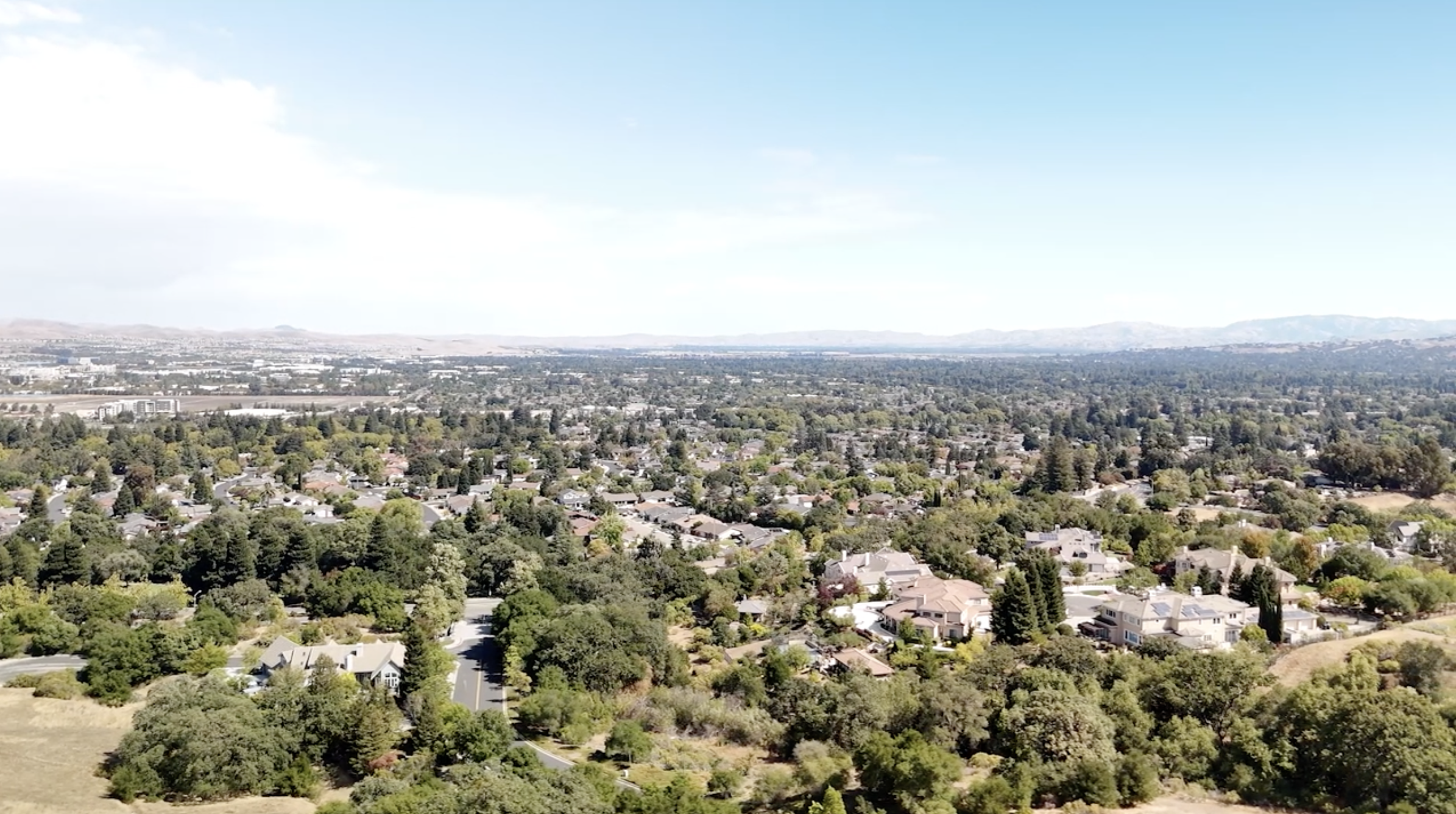
In the quarter century since David Haubert moved to Dublin with his family, he’s seen an incredible transformation in the Tri-Valley region.
When he left Cleveland with his wife and three daughters to take a job at Nestlé in San Ramon, the region was a sleepy cluster of East Bay cities with decent but not amazing schools and aging infrastructure.
But growth has changed the landscape and bankrolled public facilities. A new arts center, library and high school opened while shopping centers and new homes were built to cater to demand.
Over the last several decades, Haubert and his family witnessed the area’s metamorphosis, as one of the fastest-growing parts of the Bay Area.
Haubert went on to become a member of the Dublin school board, then mayor of Dublin and then an Alameda County supervisor, giving him an up-close look at the changes in the region, including the growing pains that come along with skyrocketing housing growth and a massive shift in demographics.
“At one point I thought I knew everybody in town and then it grew so fast that I realized there are a whole lot of people I don’t even know anymore,” Haubert said. “That was kind of a shock.”
Nestled within the Diablo mountain range, the Tri-Valley — made up of San Ramon, Dublin, Danville, Pleasanton and Livermore — has some of the fastest growing cities in the state, wooing families with its great schools, beautiful open spaces, access to BART and large single-family homes.
San Ramon, Dublin and Pleasanton have nearly tripled their overall populations since the 1970s while the numbers of residents in Danville and Livermore have almost doubled, outpacing growth in the rest of the region over those decades. The racial and ethnic makeup of the region has also changed since Haubert moved there; a larger share of the population is Asian.
But the growth in population has brought challenges. Traffic snarls the roads as people commute through the area and housing costs have skyrocketed as demand for the region’s newer stock of single-family homes, excellent schools and proximity to tech jobs draws eager buyers. Homes cost upward of $2 million in many neighborhoods, a price point considered “unimaginable 25 years ago,” Haubert said.
The boom in single-family homes in the region, however, might not be sustainable.
“Some people say things like, ‘It’s so crowded here,’ well yeah because we just built a bunch of homes for you to move into. It’s an interesting dynamic,” Haubert said. He wants to see continued growth while ensuring that city officials coordinate with the school district to avoid classroom overcrowding and other issues.
Haubert said his job as Alameda County Supervisor — representing Dublin, parts of Pleasanton, Livermore and unincorporated parts of the Tri-Valley — is to ensure that cities have adequate police staffing, a high quality of life and well-maintained open spaces such as Emerald Glen Park, 48 acres in Dublin boasting bocce ball courts, a cricket pitch, batting cages and water park complex.
The quality of life is one reason that Raj-Ann Gill decided to move to the Tri-Valley region in 2022. Gill, who lives in Diablo, a small community near Danville, said the amenities drew her to the area and she’s noticed more young families moving in.
“It’s very family friendly,” Gill said. “The playgrounds are very well maintained and everything feels newer compared to where I grew up in San Jose and Los Gatos.”
While Gill mainly works from home, she said the one downside to the area is the heavy traffic on Interstate 680 to Silicon Valley. Many Tri-Valley residents work in Silicon Valley and commute while others work for large local employers such as Lawrence Livermore National Laboratory, Workday and Kaiser Permanente.
“Whenever I go to meetings in Palo Alto, it takes a whole day because the driving there and back is just excruciating,” she said. “If I don’t leave by 2 p.m., it’s like a guaranteed two and a half hour drive home.”
Data backs up Gill’s observations: commuters in nearby Dublin have one of the longest commutes in the state.
Still, the school districts, which boast high test scores, are a major draw that keeps many tech workers in the area. A new high school in Dublin has a ceramics studio and science labs, among other amenities.
To cater to high-income employees who live in the region, housing developers have jumped into the Tri-Valley, pumping out nearly 10,000 single-family homes over the past 15 years, an outsized share compared to the rest of the Bay Area.
Trumark Homes has become one of the most prolific developers in the Tri-Valley, catering to those working families. Robin Miller, vice president of community development at Trumark, said Trumark has approvals for 1,813 homes throughout Dublin, Livermore, Pleasanton, San Ramon, Danville and Walnut Creek. Out of that total, the company has 185 homes under construction and has completed construction on 230 homes, most of which are in Dublin.
Miller said the Tri-Valley’s combination of acres of underused land, strong schools and proximity to major job centers make it a draw for developers.
“It’s the goal of every developer to do something that can meet the market for the most people and … create a community you have a part of envisioning,” Miller added.
One of Trumark’s biggest developments is Francis Ranch in Dublin, with 573 homes under construction on 165 acres and prices starting at over $1 million. The nearby amenities will likely be a draw to new residents. On a recent day, kids played at the playground at one of the neighborhood’s schools and people flocked to 88 BaoBao, a popular dumpling restaurant located at a large shopping center nearby that includes Dick’s Sporting Goods, Panera Bread and Crumbl, a cookie shop with a cult following.